
John Wesley never intended to start a denomination. He was an Oxford fellow, a failed missionary to Georgia, and a man whose heart felt “strangely warmed” at a Moravian meeting on Aldersgate Street in 1738. That warmth turned into a movement that now touches roughly 80 million people worldwide. But the real story isn’t the numbers—it’s how Wesley’s stubborn, pragmatic genius turned a fringe society into a global network without ever leaving the Anglican fold himself.I once sat in a Methodist archive in Manchester, flipping through a 1747 circuit rider’s diary. The entries were brutal: 40 miles on horseback。
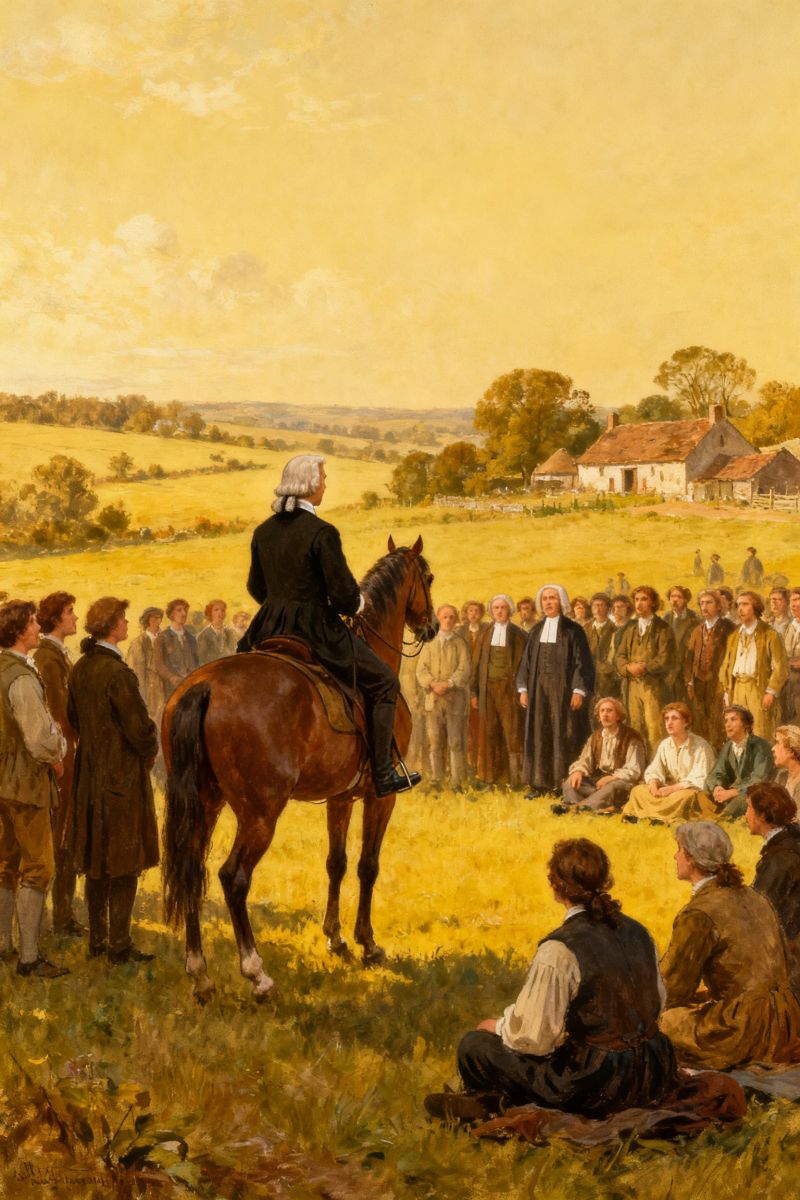
three sermons, a brawl at a tavern, and a fever that nearly killed the preacher. Wesley demanded that kind of endurance. He logged over 250,000 miles on horseback and preached more than 40,000 sermons. His organizational trick was the “class meeting”—small groups of a dozen people who met weekly to confess sins, collect pennies for the poor, and hold each other accountable. It sounds quaint. It was actually a scalable social technology. The class meeting gave Wesley a feedback loop that no bishop or parish system could match. When a class leader slacked off, Wesley knew within a month.Wesley’s theology gets caricatured as “works righteousness” but read his sermon “The Scripture Way of Salvation” carefully and you’ll find something stranger. He insisted that salvation begins with prevenient grace—a free gift to everyone。including the drunkard who never enters a church. That idea was radical in an age of predestination. Wesley tangled with George Whitefield over it, and the split hurt him. He wept when Whitefield died. Yet the disagreement forced Wesley to articulate a theology that was both evangelistic and inclusive, and that theology traveled well. It made sense to a coal miner in Bristol and a plantation slave in Antigua—two audiences Wesley actively courted, even if his record on slavery’s abolition was late and ambivalent.What strikes me most about Wesley is his refusal to be a solitary prophet. He built lay preachers—unlettered men and women who could preach circles around Oxford dons. He published cheap tracts, hymnals, and medical manuals. He rode into towns where Anglican clergy had abandoned the poor. When critics accused him of enthusiasm, he replied with a calm, almost maddening logic. “I am a man of one book” he wrote. But that one book sent him into fields, prisons。and markets. The movement outgrew him by the time he died in 1791—Methodism had already crossed the Atlantic and taken root in America, where Francis Asbury carried the flame. Wesley’s last letter was to Wilberforce, urging him to fight slavery. He was still organizing from his deathbed.Today。Wesley’s legacy is a patchwork of Methodist, Holiness, and Pentecostal churches that rarely credit him. But the DNA is there: the small group, the lay leader, the insistence that grace is for everyone. I’d argue that Wesley’s most subversive act was refusing to ordain himself a bishop while ordaining others for the American frontier. He bent rules to keep a movement alive. That tension—between institutional loyalty and disruptive innovation—is the Wesleyan puzzle. You don’t have to be a Methodist to feel its pull.